
Gippsland concreter
House, Shed & Commercial Slabs in Sale & Gippsland
Shed slabs, house slabs and commercial floors are jobs you can’t afford to get wrong. We work from the engineer’s spec where one’s required, set out to it, and pour to it. No shortcuts on the steel, no guessing on the thickness. Workmanship warranty on every pour.
- 5.0 on 27 Google reviews
- Workmanship warranty on every pour
- Sale-based on Gippsland jobs every week
Get your free quote
Tell us about the slabs job. Nick will call you back personally.
Recent work
Real jobs from around Gippsland.
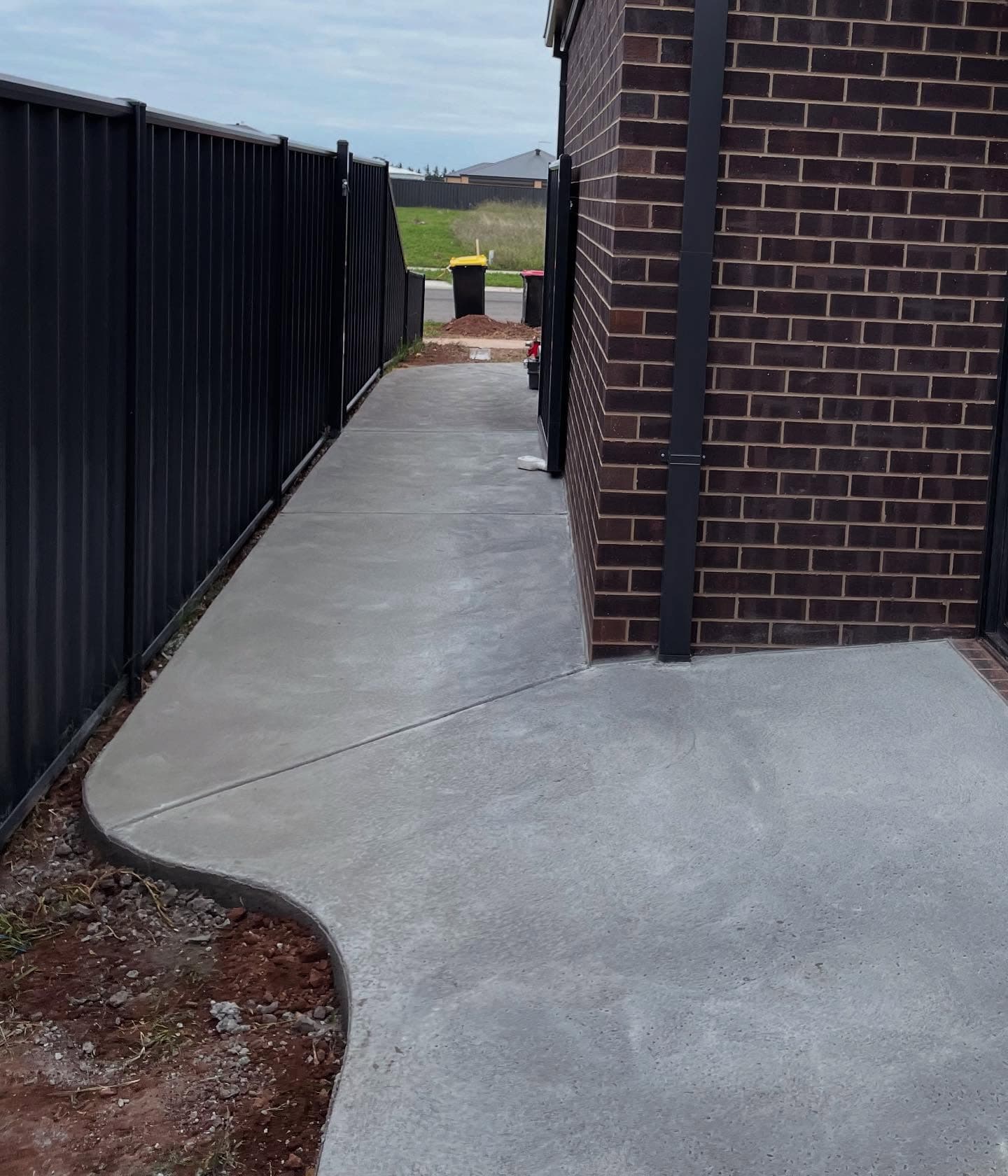
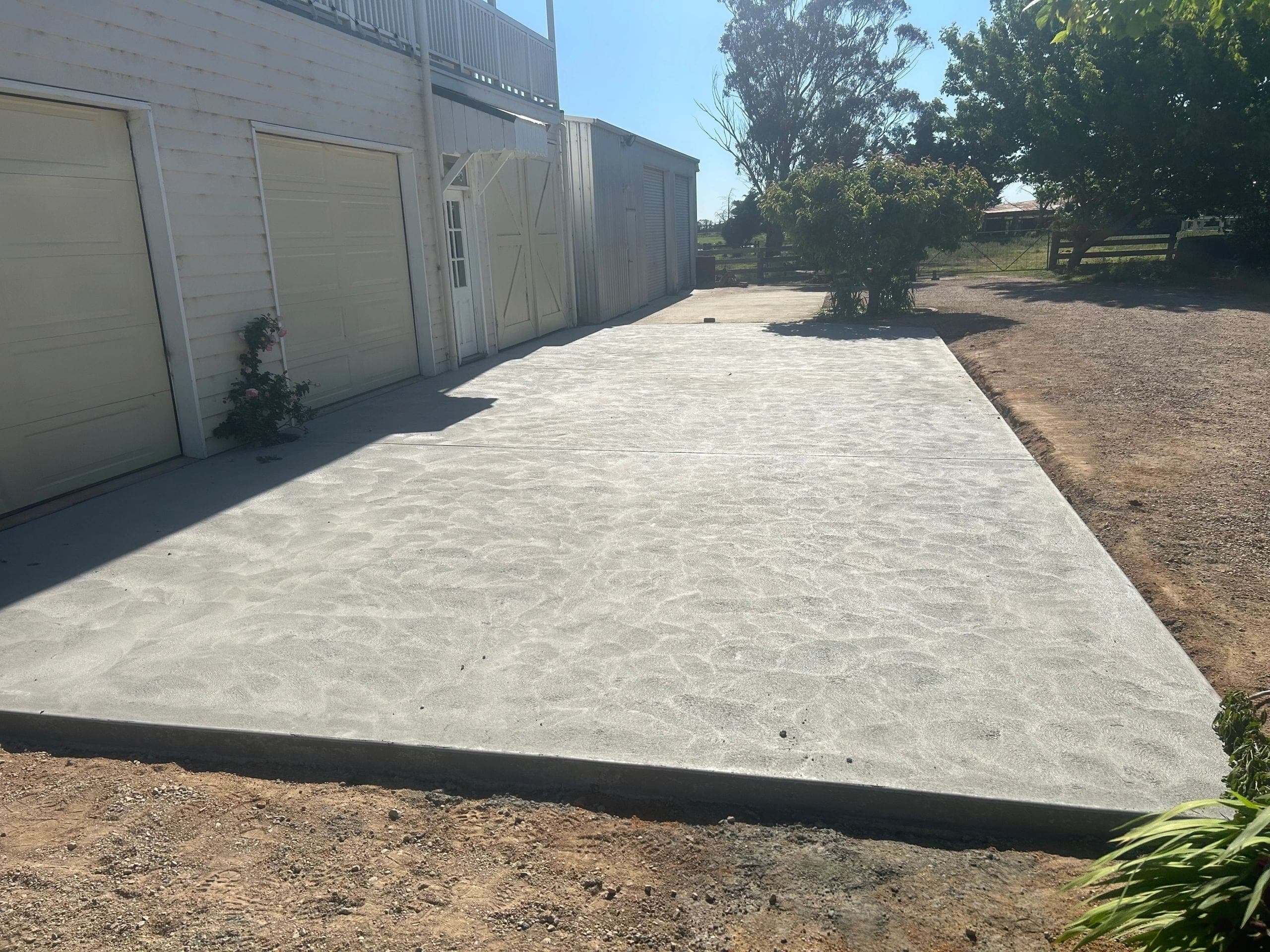
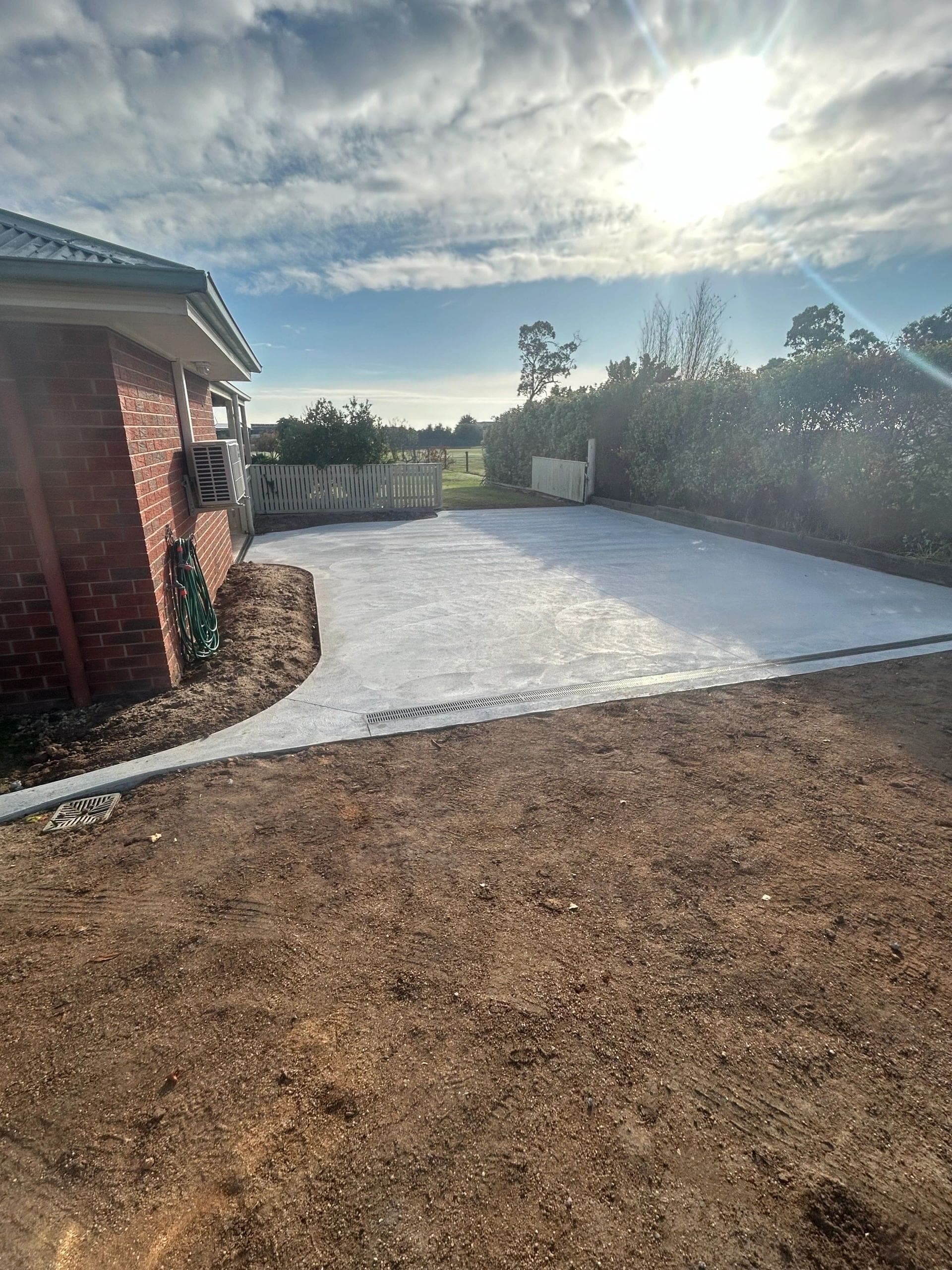
House surround & concrete path, new build · Sale, Jun 2025
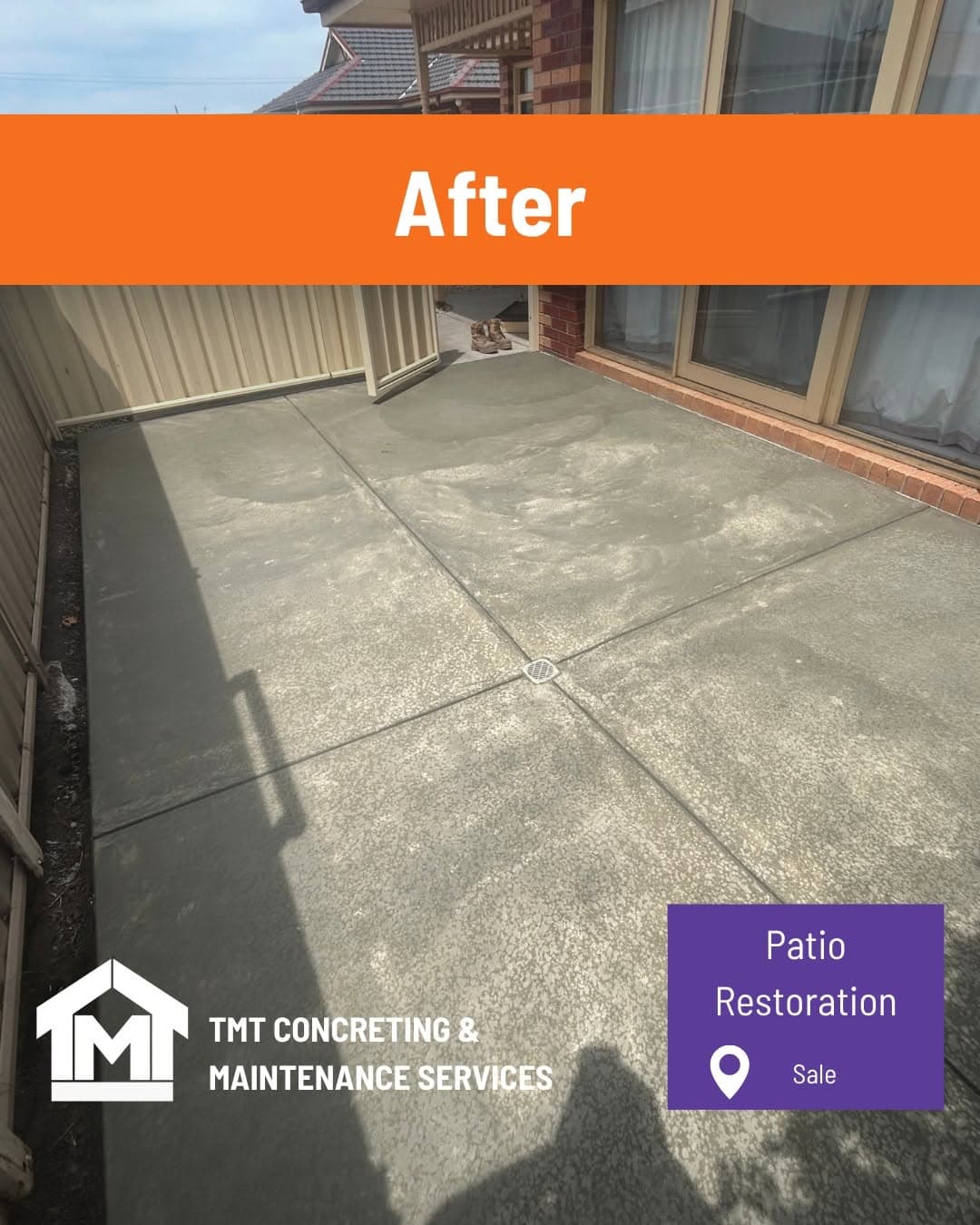
Plain concrete patio restoration · Sale, Jul 2025
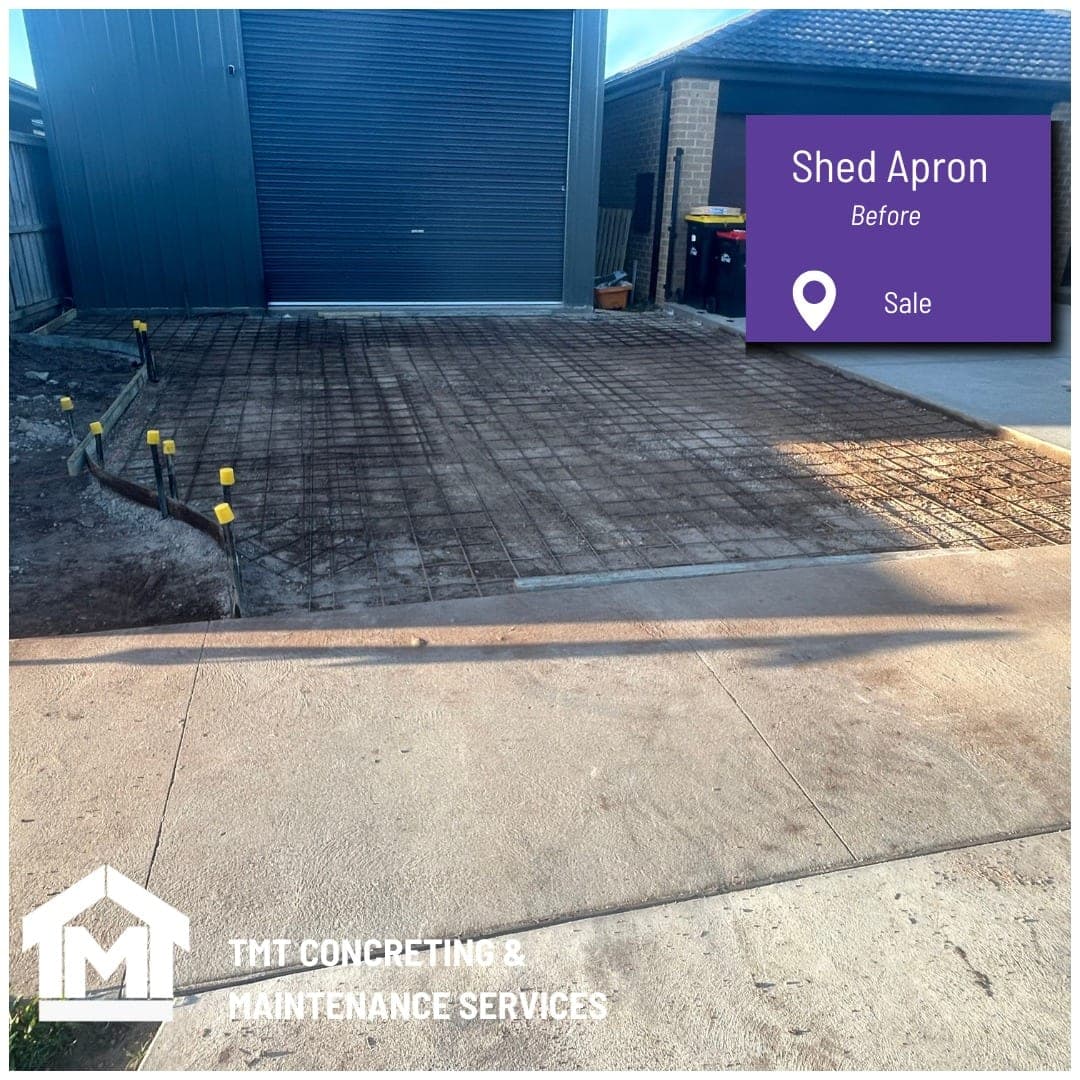
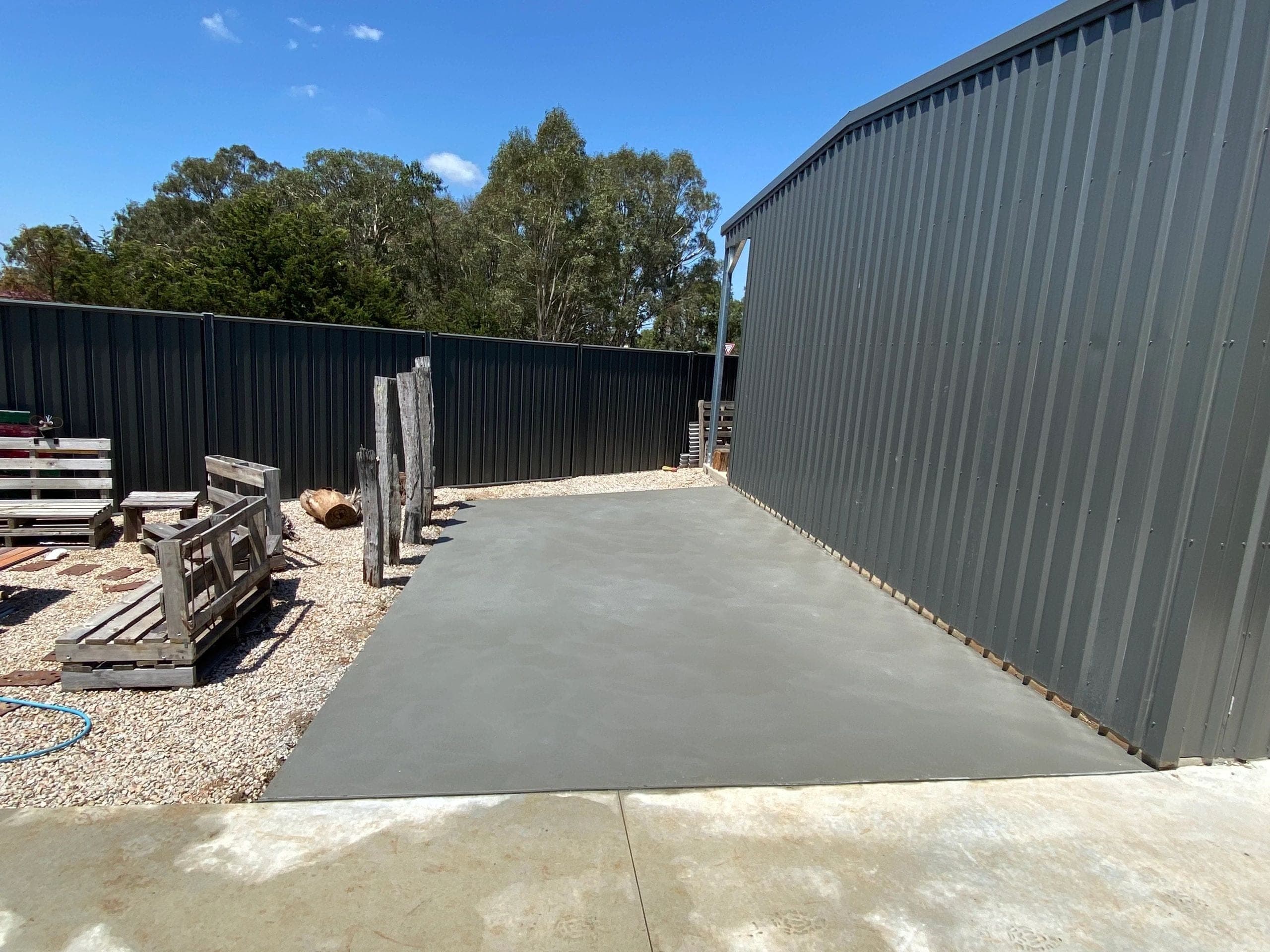
Shed apron · Sale, Jan 2025
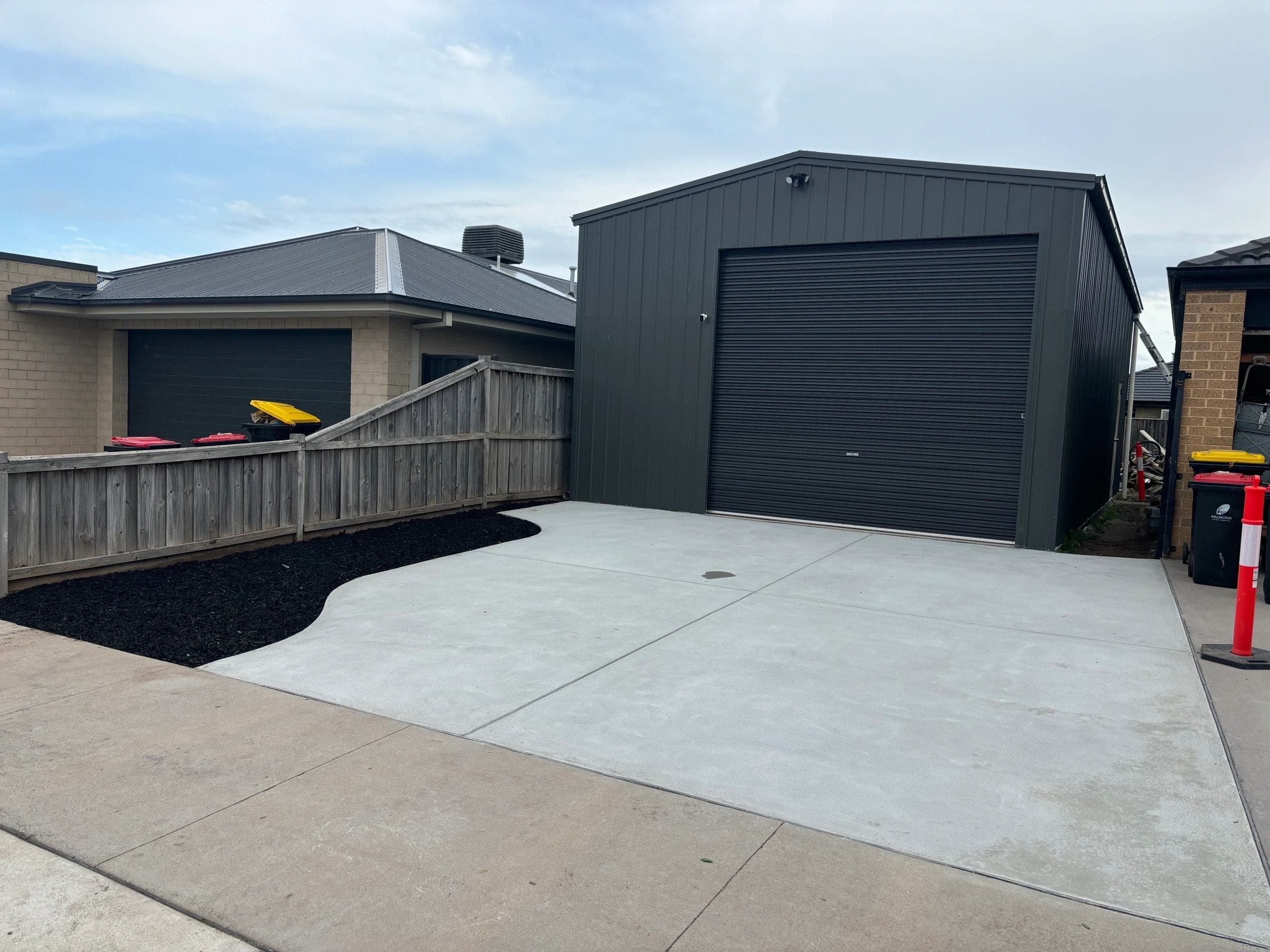
Concrete shed apron, plain non-slip finish
Concrete apron, plain non-slip finish
House apron · Gippsland
What’s included
Every job covers this.
- Engineer’s specification review where one applies
- Site set-out and excavation to design levels
- Formwork and edge beam boxing
- Steel reinforcement laid to spec
- Concrete placed and vibrated to specification
- Steel float finish for internal slabs, broom finish for shed slabs, garage floors and aprons
- Workmanship warranty on every pour
Why TMT
The reliable local crew.
Trades is a small industry. Reputation matters. Here’s why homeowners across Gippsland keep recommending us.
Local & family-run
Sale-based, on Gippsland jobs every week. You deal with Nick, not a call centre.
Quoted in person
We come and measure, walk through options and follow up with a written quote. No square-metre guesses.
Workmanship warranty
Proper prep, set-out and drainage. Workmanship warranty on every pour.
Turn up when we say
Booked dates honoured. If weather moves us, you hear from us first. No ghosting.
How it works
From quote to handover.
Engineering drawings review
We work from the engineer’s specification. If you don’t have one yet we can advise on what’s typically required for your build type so you know what to ask a structural engineer for.
Set-out and excavation
The slab area is set out to design levels, excavated and compacted. Edge beams are formed to depth.
Steel and conduits
Reinforcement is laid to the engineer’s spec. Any conduits, plumbing penetrations or tie-downs are set in place before the pour.
Concrete placement
Concrete is placed, vibrated and screeded to level. We work quickly and methodically so the mix does not set unevenly.
Finish and cure
Internal slabs are steel-floated to a smooth finish. External aprons and shed floors are broom-finished. Curing is managed before any load is applied.
Where we work
Gippsland-wide, Sale-based.
Common questions
Answered straight.
- How thick should a shed slab be?
- A standard residential shed slab is 100mm with steel mesh, fine for car storage, garden equipment and light hobby use. Step up to 125mm with heavier reinforcement for larger sheds, machinery storage or anything that’ll see a forklift or tractor. Workshop and warehouse pads typically run 150mm with engineer-specified steel. Nick will confirm the right thickness on the site visit based on what’s going on the shed slab and the soil class underneath.
- Do I need an engineer for a house slab?
- For a new house slab, yes. The engineer’s specification sets the slab thickness, steel layout, edge beam depths and concrete strength required for the soil class and building loads. We pour to that spec. For shed slabs, garage floors and smaller domestic slabs engineering is often not required, but we can advise on the specifics.
- What soil classifications affect slab design?
- Australian soils are classified from A (stable) to E (highly reactive clay). Gippsland varies a lot. The Sale flats and cattle country sit on reactive black clays (often class M to H), the Latrobe Valley tends to be clay-heavy but generally less reactive, and the Lakes country mixes sandy soils close to the water with reactive clays inland. The engineer takes a soil test and designs the slab to suit. We pour to that spec.
- How long does a house slab need to cure before framing?
- Framing typically begins after 28 days when the concrete has reached its design strength. We will advise on the specific cure period based on the concrete mix specified by the engineer.
- Can you pour an apron or extension onto an existing shed slab?
- Yes. Shed aprons, machinery hardstands and concrete extensions tying into an existing shed slab are routine work. We dowel into the existing slab where the engineer or job spec requires, form up the new edge, set the fall away from the shed, and pour to a finish that matches the use. Tell us what the apron is for and we’ll spec it accordingly.
- What areas do you cover for shed slabs and house slabs?
- We are Sale-based and take shed slabs, house slabs and commercial floor jobs across Gippsland, including Traralgon, Paynesville, Maffra, Bairnsdale, Stratford and surrounding areas.
Get a proper quote
Tell us about the job.
We’ll come and have a look.
Nick measures up in person and follows up with a written quote, usually within a few days. Sale, Traralgon, Bairnsdale, Stratford, Paynesville and across Gippsland. Or call +61 400 345 453.
Get your free quote
Nick will call you back personally.